There is a moment every game master chases. It usually happens unexpectedly. After a grand reveal, a player goes quiet for a second. Somebody at the table says, “Wait… what?” Then another player leans forward. Suddenly the entire group realizes that the story they thought they were participating in has been about one of them the entire time.
That moment changes everything. The campaign stops feeling like a tour through somebody else’s world and starts feeling personal.
Many campaigns never reach that point. Not because the worldbuilding is bad and not because the story is weak. Most of the time, it’s because the players’ characters are floating alongside the story instead of being a part of it.
Players do not want to feel like random mercenaries to solve your plot. They want to feel connected to your world. They want scars inside it. History inside it. Consequences in it. They want the story to know who they are and have a stake in it.
Often, before your campaign begins, the game master will ask for or be presented with backstories. Unfortunately, many game masters do absolutely nothing with them. A player will write three pages about a missing sibling, an old mentor, a ruined homeland, or a betrayal that has shaped their character’s purpose. The game master will read it once and say “oh that’s pretty cool,” and the campaign goes on as if none of it existed in the first place.
At that point, why would the player care? If the world does not react to the character, the character does not feel real. The best campaigns are not built around a plot. They are built around people colliding with a world that changes because of them.
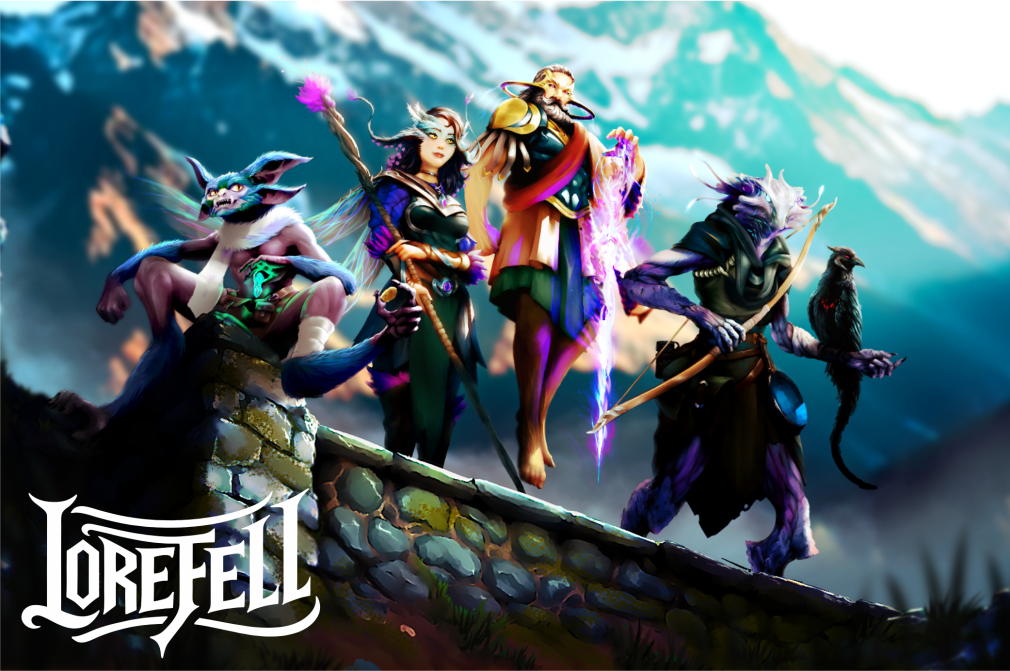
When I started building LoreFell, I knew I wanted players to feel like the world already had history with them. I didn’t want backstories that felt disconnected from the campaign. I wanted the setting itself to slowly pull their stories to the surface. I didn’t want a story that my players just experienced, I wanted a story that they told with me.
Before I created LoreFell, I ran into this exact problem in our games. I got tired of seeing incredible player backstories disappear after session one. To solve it, I came up with a dangerous idea. That idea was that the default backstory of our Fell heroes was that each of them enter the world without memory. They have no idea who they are or what they did previous to the starting scene. The characters don’t know any of their backstory. But the player usually does.
Before the campaign begins, players can craft a backstory and give it to the LoreMaster to integrate into the game. It's never required, but it sure changes our game. Not necessarily to dump exposition, but to give the LoreMaster ammunition.
Some of the best moments at my table never came from my worldbuilding. They came from players realizing the world had been built around them the entire time. Because the players know pieces of their past while the characters do not, every reveal becomes collaborative. The LoreMaster gets to surprise the player, while the player gets to slowly discover how their own story fits into the world.
At this point, the campaign becomes a path of discovery. An artifact matches the symbol from a player’s forgotten path. An enemy recognizes one of the Fell before they even recognize themselves. A player hears a name they should not know and instinctively reacts to it.
The world remembers them long before they remember themselves. That changes the energy at the table completely. Instead of players explaining the lore to the campaign, the campaign reveals the lore back to them piece by piece. And honestly? Our players lose their minds over it.
Most players treat their backstory as a novel, when in reality it is a toolbox. You don’t need twenty pages of lore to make a character matter. Most of the time, you only need a few strong hooks. Someone they lost, someone they hate, something they regret, something they fear, or perhaps something they desperately want. Anything will work, but a few is enough. The goal is not to make players recite their past but instead to put pressure on it.
Consequences are a major tool in that toolbox. A character who betrayed their homeland should eventually face the consequences of doing so. A character who swore an oath never to kill again should be pushed toward violence. A character who is afraid of magic should be given the opportunity to alter the story drastically by being given a powerful magical artifact that they, and only they, can use. In doing so, the roleplaying hits home and becomes real.
One of the easiest ways to make your players care about your world is to make your world care about them. The world should react and not just after major victories either. Rumors spread, factions may notice them. Forgotten enemies resurface or discovered symbols trigger lost memories.
A random NPC recognizing a player’s name or description can create more excitement at your table than a three page lore dump. Because suddenly that player’s character matters, and so does that player.
One of our favorite tools is to connect the players before the campaign even starts. Perhaps two characters survived different sides of a world altering event. Or perhaps a legendary weapon one player is hunting was stolen by another player years ago. Now the party has history before the first dice is even rolled. When one player’s story moves forward, everyone at the table becomes invested.
But not every session needs to focus on every player equally. That’s impossible. What matters is making sure everybody eventually gets their moment.
One session may revolve around a player confronting somebody from their past, while another session might focus on a player discovering the truth behind their lost lineage. Rotate the emotional center of the story. Everyone gets the spotlight. When players know their time is coming, they stay engaged even when that spotlight shifts.
That is your payoff. The best campaigns leave their marks, not just on the players but on the world itself. Cities falling because of players' decisions. Religions fracturing, wars begin, new villains rising. At the end of a grand campaign, players can point to that world and say: “That was because of us. We created that.”
That is the difference between watching a story and living inside of one. That is where tabletop roleplaying becomes not just a game, but something truly special.
Learn more about LoreFell at www.lorefell.com. And feel free to join our games online as a player or audience member on The Nexus Adventure web application or on YouTube/Twitch. We hope to see you there!
Stepping into the shoes of a completely new character is about much more than picking stats and putting on a funny accent—it’s a profound exercise in radical empathy. This post explores the psychological journey of "Assuming the Role," navigating the initial awkward grind of embodying a new persona, and uncovering the deep, life-changing bonds that form through shared vulnerability at the table. Fair warning: once you truly connect with a character, there is no going back.
After thirty years of roleplaying, Nate Johnson realized his games were falling into the same repetitive grooves. The solution? LoreFell. Discover the origin story of this new, classless TTRPG system designed to put creativity first, and learn how you can help shape its future during the exclusive playtests on The Adventure Nexus starting in 2026.
NEED SOME HELP PLAYING OUR GAME? VISIT OUR HELP CENTER AND WE WILL SOLVE IT!
The Adventure Nexus Beta is Now Live!
We've recently launched our Limited Beta testing phase and are incredibly excited about the product we've envisioned and its potential to positively impact the lives of gamers everywhere. We anticipate The Adventure Nexus to be fully available and ready to roll out soon!




.png)