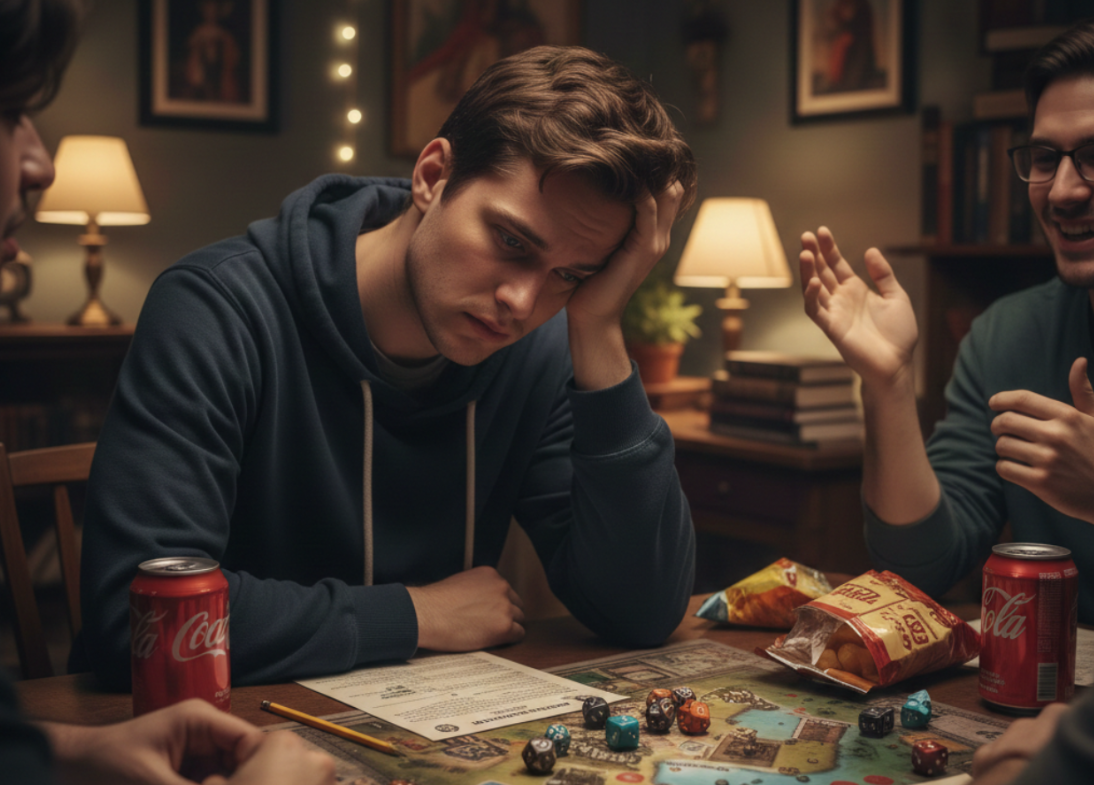
We’ve all been there. You’re sitting at the table, your character sheet is in front of you, the dice are ready, but you’re checking the clock. Maybe the combat feels like a slog, or the roleplay feels forced. Perhaps the "vibe" just isn't right.
Tabletop RPGs are a massive time commitment, and when the fun stops, the silence can feel deafening. If you’ve realized you’re no longer enjoying your game, don’t panic. It doesn’t necessarily mean the campaign is dead or that you’re a "bad player." It usually means there is a misalignment between expectations and reality.
Often, in my experience, it has been rooted in the failure to effectively deliver a solid Session Zero, or not checking in with your players regularly. I have seen it from both sides, as a GM who let the Session Zero slide, or taken shortcuts, and as a player who didn’t get that effort up front.
Here is a step-by-step guide for players on how to handle the "unfun" slump.
1. The Internal Audit: Why is the Fun Missing?
Before you speak to the group, you need to identify the root cause. Ask yourself:
- Is it the Mechanics? Do you find the system too crunchy or too light?
- Is it the Narrative? Is the story moving in a direction that doesn't interest your character?
- Is it the Social Dynamic? Are there "main character" players or "murder-hobos" making you uncomfortable?
- Is it the Environment? Is the GM’s style (e.g., high-lethality vs. heroic fantasy) different from what you enjoy?
2. The "Session 0" Retrospective
Many table issues stem from a lack of a Session 0. This is the foundational meeting where players and GMs align on tone, house rules, and safety tools. If your GM skipped this, you are essentially playing a game without a rulebook for social conduct.
If you realize there was never a clear outline for communication or game tone, this is likely your culprit. Without a Session 0, players often drift into different genres—one person thinks they’re in a gritty horror game while another thinks they’re in a slapstick comedy.
3. Initiating "The Talk"
Once you know why you aren't having fun, you need to speak up. TTRPGs are collaborative; if you aren't enjoying it, there’s a high chance someone else feels the same way.
- Talk to the GM Privately First: Don't ambush the GM in the middle of a session. Send a respectful message or ask for ten minutes after the game.
- Use "I" Statements: Instead of saying "You make combat too long," try "I find myself losing focus during long combat encounters. Is there a way we could make them more dynamic?"
- Be Specific: "I'm not having fun" is hard to fix. "I feel like my character's backstory isn't being integrated, and I feel disconnected from the world" is a problem with a solution.
4. Propose a "Retroactive Session 0"
If the table is struggling with communication, suggest a "Check-in Session."
- Re-align Expectations: Discuss the tone again. Is this a serious political drama or a dungeon crawl?
- Introduce Safety Tools: If the game has become too dark or uncomfortable, suggest tools like the X-Card or Lines and Veils. These provide clear protocols for when things go too far.
- Establish a Feedback Loop: Suggest that the GM spends 5 minutes at the end of every session asking for "Stars and Wishes"—one thing you loved (Star) and one thing you’d like to see next time (Wish).
5. The Hard Truth: No Game is Better Than a Bad Game
Sometimes, despite your best efforts, the table isn't a fit. If the GM is unwilling to adjust, or if the other players have a fundamentally different idea of fun that you can't get behind, it is okay to leave.
Leaving a game doesn't have to be a dramatic bridge-burning event. A simple, "Hey everyone, I've realized my playstyle doesn't quite mesh with the direction this campaign is going, so I'm going to bow out to find a table that's a better fit," is perfectly acceptable. Always do your best to be respectful and just move on.
Conclusion
Your hobby time is precious. You owe it to yourself—and to the other players—to be honest about your enjoyment. A TTRPG is a conversation; if you stop talking, the game stops working. By identifying the gaps in communication and advocating for your own fun, you might just save the campaign—or at least save your Sunday nights.