Satanic Panic to Indie Magic: The Real Story of Talking D&D Today
For decades, rolling a 20-sided die in a dimly lit basement was treated less like a hobby and more like a sign of impending moral collapse. The Satanic Panic of the 80s painted Dungeons & Dragons as a dangerous gateway to dark arts, leaving a lingering, absurd stigma that shadowed tabletop roleplaying for generations.
Then came the modern renaissance. Live-play shows like Critical Role and Dimension 20 stripped away the mystery, revealing the game for what it always was: improvisational storytelling and shared joy. Stranger Things leaned heavily into nostalgic 80s aesthetics, recasting the misunderstood outcast as the hero. When COVID-19 hit, digital tabletop platforms took these cultural embers and blew them into a roaring fire. D&D didn't just survive; it went mainstream. What once earned you a spot at the lonely table is now a badge of honor, a highlight on a dating profile, and a staple of modern geek culture celebrated through live shows, elaborate cosplays, and weekly game nights everywhere.
Yet success has its own complications. D&D has always been the gateway TTRPG—much like Magic: The Gathering is to card games—throwing a massive net that pulls newcomers into the broader hobby. But in recent years, Wizards of the Coast has engaged in a staggering series of self-inflicted wounds and corporate blunders. As the executive leadership continues to drive nails into their own golden coffin, a vibrant wave of indie RPGs is rising to take the spotlight. A new generation of players is discovering games powered by lighter rules, richer narrative mechanics, and breathtaking original worlds. While D&D will always hold the throne as the venerable progenitor of the genre, the sheer momentum of the indie scene is proving that tabletop gaming is far bigger than any single brand.
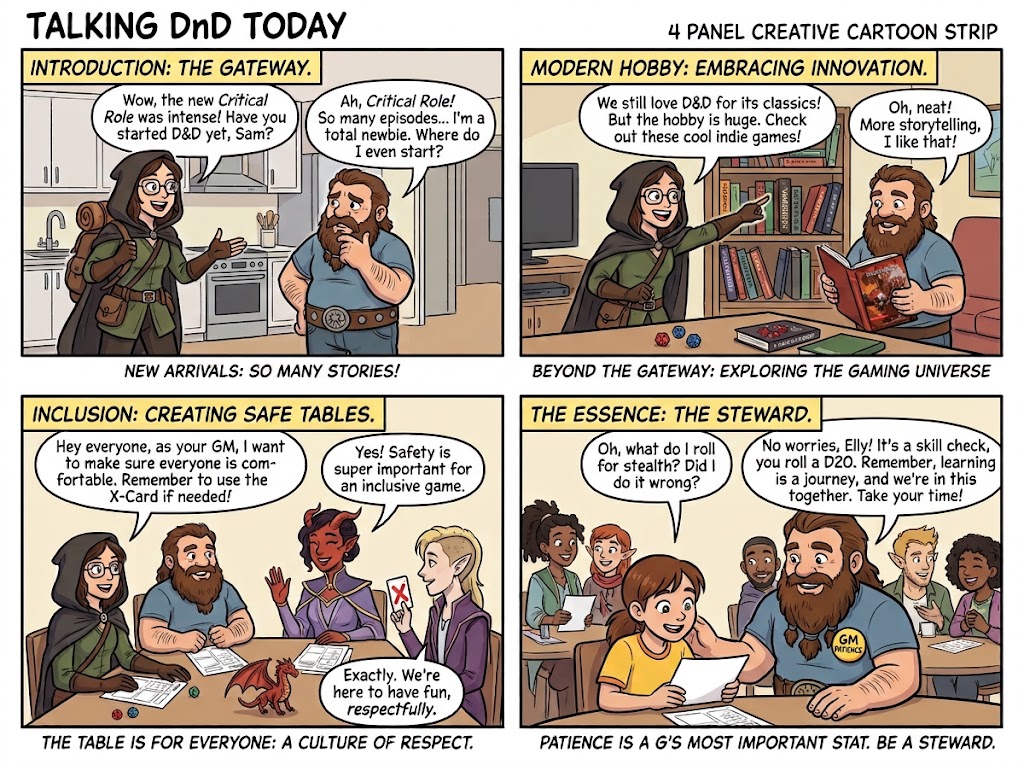
With this explosive growth comes a new responsibility for how we talk about, share, and cultivate the hobby today. Doing TTRPGs right in this era means recognizing that the table belongs to everyone. The days of elitist gatekeeping and "you're playing it wrong" attitudes are dead and buried—or at least, they ought to be. Modern tabletop gaming flourishes when it is intentionally inclusive, safe, and welcoming to people of every background, identity, and level of experience.
Being a great steward of the hobby starts before the first die is ever rolled. Implementing safety tools like Session Zeros, Lines and Veils, or the X-Card isn't about stifling creativity; it’s about creating a foundation of trust. When players know their boundaries are respected, they feel empowered to take creative risks, roleplay deeper, and lean into the collaborative story without fear. Respect and safety aren't optional modules you tack onto a campaign—they are the core mechanics of a healthy table.
For those stepping behind the screen for the first time as a Game Master, remember that your greatest stat isn't your knowledge of the rulebook—it's your capacity for empathy and grace. You will make mistakes, rules will be forgotten, and players will derail your meticulously prepped plotlines in the first five minutes. That’s not failure; that’s the magic of the game. Embrace the chaos with grace, hold space for your players to shine, and keep learning alongside them. As I like to tell every aspiring Game Master: "The Master of Patience is the Master of all things."
D&D will always hold a sacred place in my heart, and I’ll never fully let it go. But if you’ve only ever played 5th Edition, I urge you to spread your wings. Try a gothic horror mystery, a sci-fi mech combat engine, or a cozy narrative game about woodland creatures.
Trust me. The worst thing that could happen is that you have a good time and make some new friends.
You may die in the process. Figuratively…
Will Moquin